Open source  ·  Self-hosted  ·  MCP built in

A single pane of glass for your home.

Every system in your house, what it needs, and when it needs it. Homebase keeps the maintenance, the history, and the context in one place, so you know what your house needs instead of guessing.

28 appliance & system types
0 passwords to manage
1 record for you & your agents
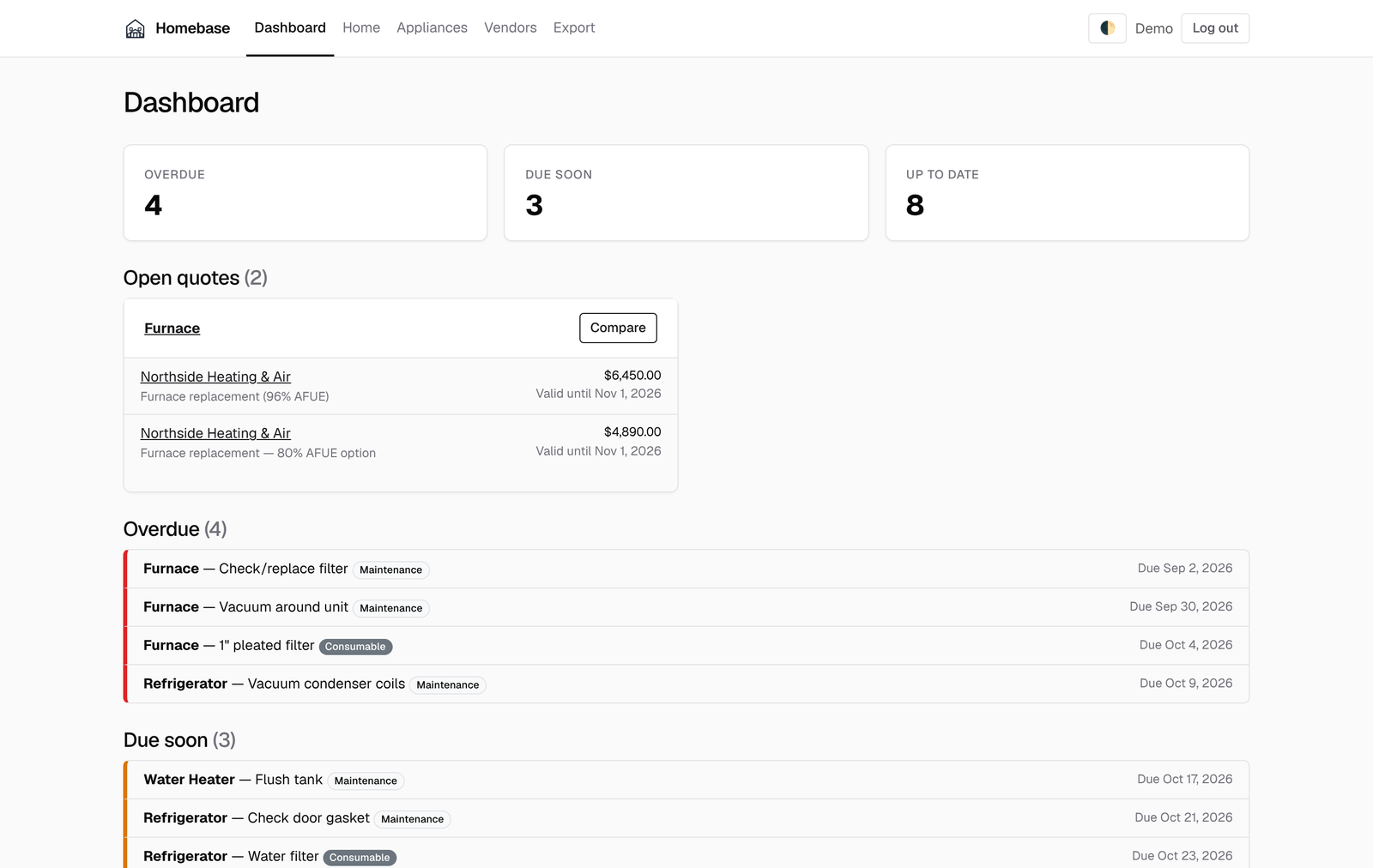
Homebase dashboard: overdue, due-soon, and up-to-date maintenance across the house, with open vendor quotes

Why Homebase

A house is a lot of systems.
You shouldn't have to remember them all.

Furnace filters, water heater flushes, gutter cleanings, the contractor you liked, the paint code for the hallway. It usually lives in a junk drawer, a dozen email threads, and your memory. Homebase pulls it into one place and keeps up with it for you.

01  UNDERSTAND

See everything in one place

Every appliance and system, its model and serial, manuals, service history, and the rooms and zones it serves. The full picture of the house on one screen.

02  KEEP UP

Know what's due, and when

Each system comes with its usual maintenance schedule. Mark a task done and the next date sets itself. The dashboard shows what's overdue before it turns into a repair.

03  AUTOMATE

Hand the busywork to agents

A built-in MCP server lets your AI agents read and update the same record you see. Chat with your house, or let an agent log the service visit for you.

What's inside

Simple to use.
Thorough underneath.

A clean, server-rendered UI for the day-to-day, backed by a well-structured data model that remembers everything.

Maintenance dashboard

Overdue, due soon, and up to date across the whole house, with professional service visits called out separately from the things you do yourself.

Systems & appliances

Make, model, serial, install date, manuals, and nameplate photos. Type a model number or snap the label and Claude fills in what it's confident about.

Schedules that set themselves

Add a furnace and its checklist comes with it: filter changes, cleanings, a yearly tune-up. Filters, anode rods, and other consumables get part numbers and buy links.

Vendors & quotes

Every contractor, their rating, and every visit they've made. Log competing quotes against a job, compare them side by side, and accept one to decline the rest.

Rooms, zones & paint

The house itself: square footage, year built, floor plans, inspection reports, and every paint color by room with its code and a real swatch.

One-click context export

The whole house as one Markdown file, sized for an LLM's context window. Paste it into any chat and ask what's coming up this fall.

Built for agents

A durable record,
not just agent memory.

Homebase ships with an MCP server, so your home data lives in one centralized, well-defined store, and you choose how to work with it: the web UI, a chat, or an agent.

Prefer to let an agent like Muse or MyClaw handle the back end? Point it at Homebase. It reads the same appliances, zones, and vendors you see and writes service visits back to the record. The next agent, or you, picks up from real data instead of whatever happened to be in one conversation's context.

Run it locally over stdio for a desktop client, or remotely over HTTPS at /mcp. Each agent gets its own bearer token, which unlocks the MCP tools and never the website.

You
Web UI
Google sign-in, any browser
Your agents
Muse, MyClaw, Claude
MCP over stdio or HTTPS
One record
Homebase
Systems, schedules, history, vendors, documents
list_appliances list_zones list_vendors create_service submit_feature_request
Your server
SQLite + your files
On hardware you choose

You stay in control

Your data, your server,
your call.

Self-hosted from the ground up, with sensible defaults so it's secure without becoming a second job.

You decide where it lives

Your home's data stays on a server you control. No third party holds your floor plans, receipts, or service history.

Serve it however you like

Docker Compose, a Raspberry Pi with systemd and Nginx, a VM, or a Tailscale address. One process serves both the site and the MCP endpoint.

Google sign-in by default

Google OAuth with a strict email allowlist, so you never manage logins or passwords. Every page and file is locked to the accounts you list; remove one and restart to revoke it.

The app

See it in action.

What's due, what it is, who to call, and what it cost last time.

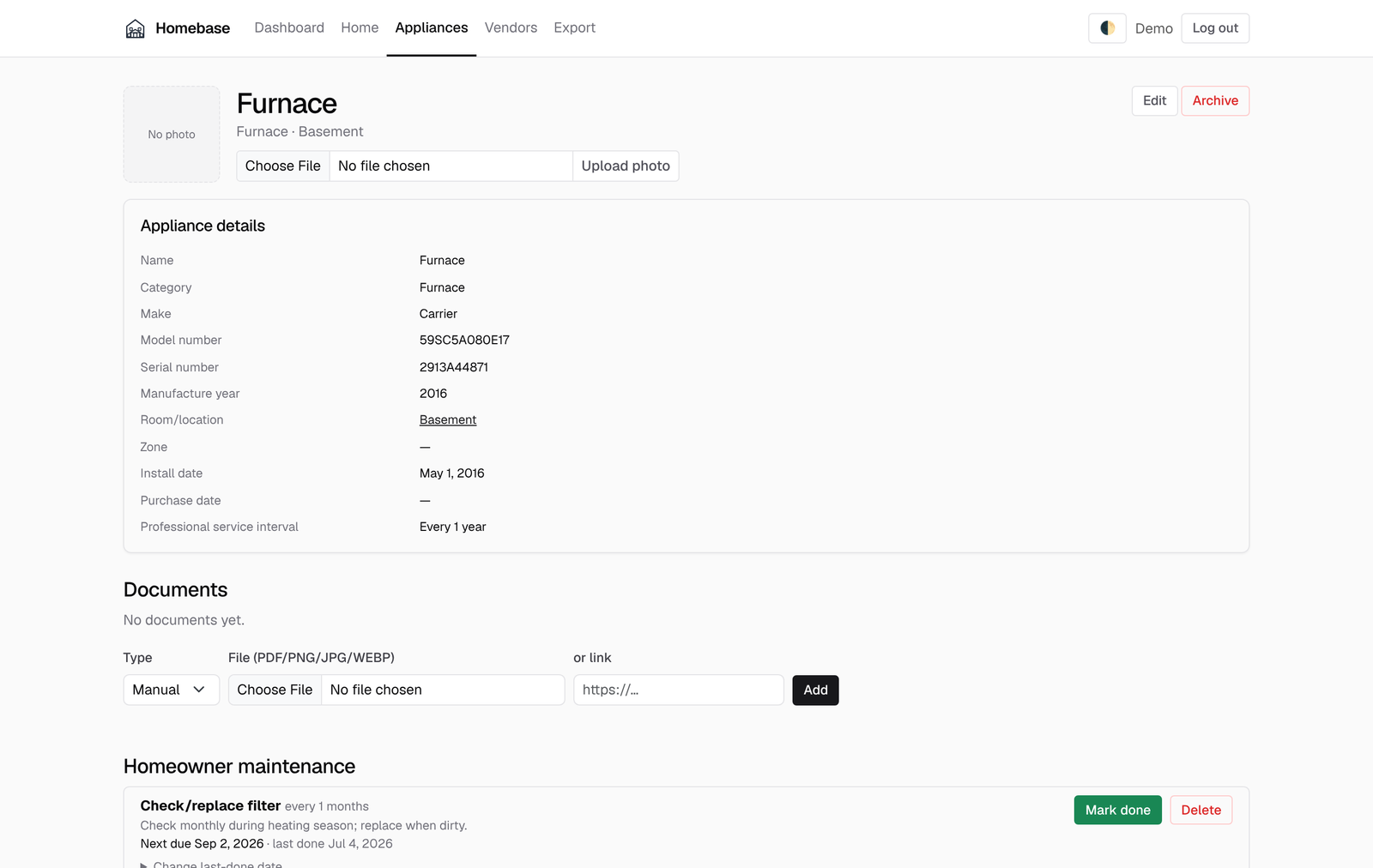
Appliance
Homebase appliance page for a furnace: details, documents, and maintenance tasks
Appliance: Model, serial, install date, documents, and its maintenance checklist, all on one page.
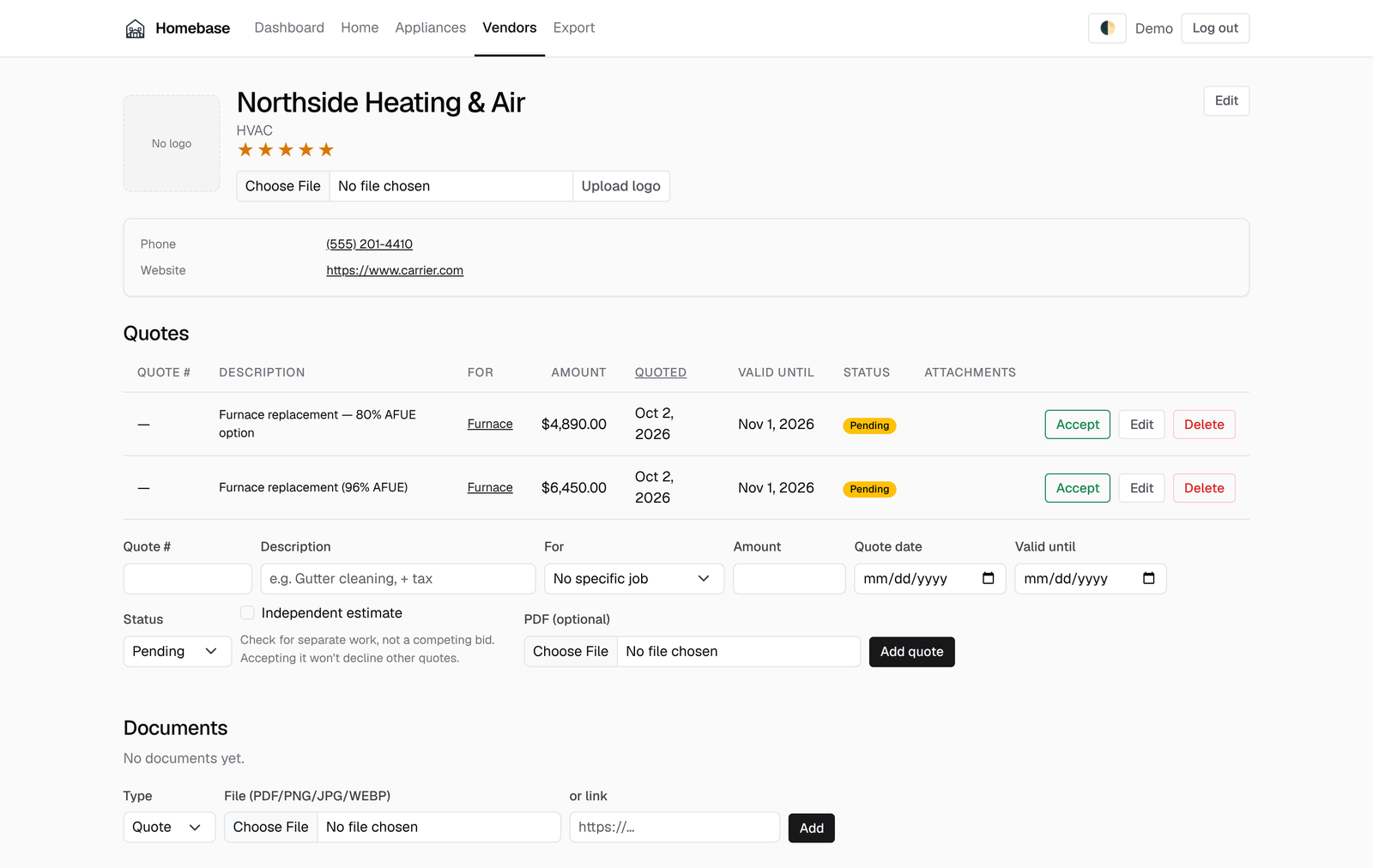
Vendors
Homebase vendor page with contact details, rating, and quotes
Vendors: Contact details, ratings, and every quote, linked to the job it prices.
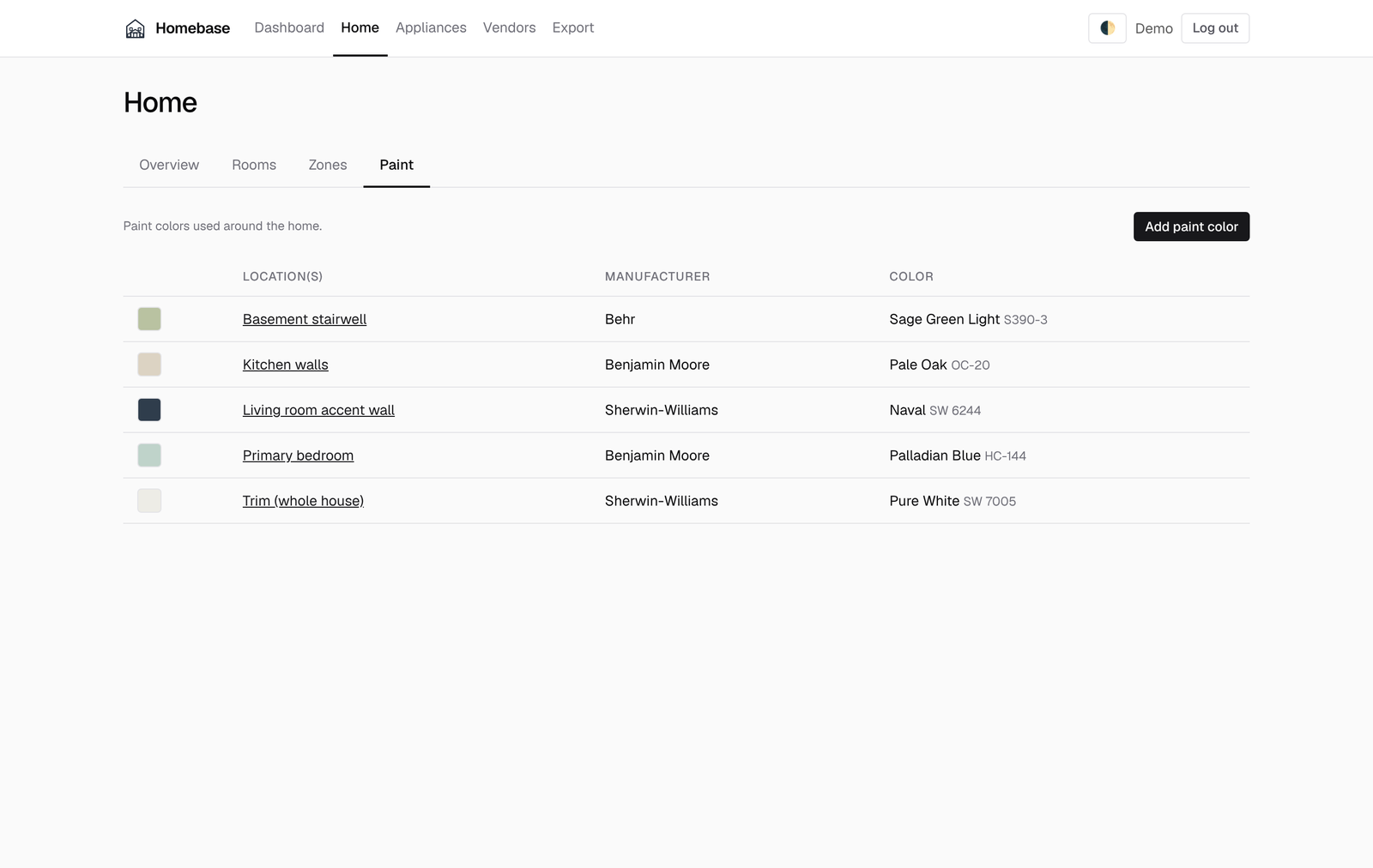
Paint
Homebase paint colors with swatches by location
Paint: What was painted where, with the color code and a swatch to match at the store.
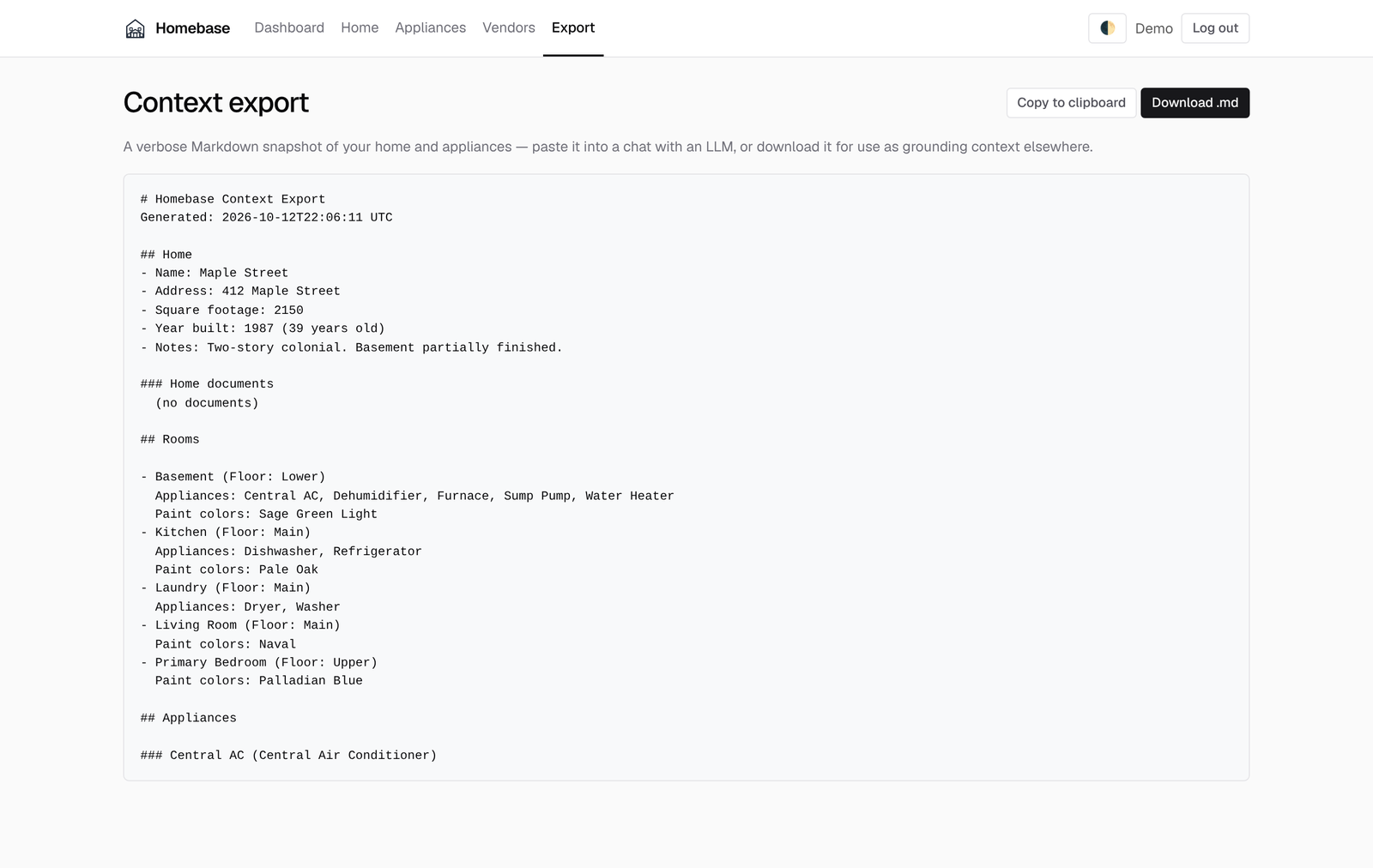
Context export
Homebase context export: Markdown snapshot of the home
Context export: The whole house as one Markdown file, ready for any chat or agent.

Getting started

Up and running
in an afternoon.

Fork the repo and follow the README. It's a Flask app backed by SQLite, with a Docker Compose setup if you'd rather not touch Python at all.

1

Deploy it your way

Docker Compose, or uvicorn under systemd behind Nginx. Migrations run on start, so updates are pull, rebuild, restart.

2

Turn on Google sign-in

Create a Google OAuth client and list the emails allowed in. The first sign-in creates your household; everyone on the list shares it.

3

Walk the house, connect your agents

Add each system once and its schedule follows. Then run flask mcp-token to give an agent its own key.

Under the hood

Built on tools
you already know.

The same foundation as Ledger: Python, Flask, and SQLite, with server-rendered templates and no JavaScript build step. Readable code you can audit, fork, and fit to your house.

Python 3 Flask 3.0 SQLite SQLAlchemy 2.0 Bootstrap 5 Google OAuth MCP Anthropic API uvicorn Docker

Know what your house needs.
Keep up without the spreadsheet.

Open source and free. Self-hosted, signed in with Google, ready for your agents.

View on GitHub See Ledger too